In modern architecture, people now choose lightweight cladding instead of heavy finishes. These days, weight matters for both how the building works and how free you are with design. When you build, you look for materials that have a refined look, go up fast, and do not add stress to the building structure. That is why architects, builders, and homeowners want a wide range of materials. These options give weather protection, neat details, and more ways to use them. This choice is not just about looks. It also changes how people plan, build, and take care of projects.
Understanding Lightweight Cladding in Modern Construction
Cladding in construction is an outer layer that you fix on top of a wall. People use it to make buildings look better and to get more weather resistance. In some buildings, it can also give better thermal insulation and help with noise control. In recent years, lightweight cladding has become popular. This is because projects now want faster work and a clean look on the building’s outside.
Cladding can also help to cut down on maintenance requirements if you pick the right material. You get easy installation, minimal maintenance and a more finished look. This makes it good for new buildings and for when you do renovation work. To see why lightweight cladding matters, it is good to know what makes a system truly light.
What Makes Cladding Lightweight? Key Properties and Technology
A lightweight cladding system uses less material by weight in each square metre compared to thick wall finishes or normal masonry. This low dead load is important. When you add an additional layer, it impacts the wall, the fixings and the support system that hold everything up. Thin parts, careful manufacturing, and the way the material is put together all work to make the cladding lighter.
Some kinds of these systems use slim clay shapes. Some use composite materials, metal sheets or fibre cement. Every type of cladding offers its own mix of how strong it is, the look and feel, and how it handles fire. Because of this, weight is only one thing to think about when picking one.
For exterior walls, people often use metal, fibre cement, timber weatherboards, slim clay, brick-look or stone-look systems. A lightweight choice is picked when speed is important, or when the wall has curves, or for retrofit jobs where the walls need to stay as light as possible.
The Role of Weight Reduction in Sustainable Building Design
Making the structural load lighter can help the design be better. If the facade of the building is not so heavy, you may need less support from the wall build-up and other parts. This can help in a new building and when working on upgrades. It is useful when there is a need to improve old walls or add something new on the surface.
Lighter parts also help with practical sustainability. They are easier to move, easier to put into place, and can be fixed faster. If the team spends less time handling the materials, there is less disruption on the site. Some systems also give thermal insulation or act as a weather screen, which are good extra features.
Even with this, you should always check the project requirements. Think about the climate, fire resistance, how much it will need to be looked after, how long it will last and what it is meant to do. Using a low maintenance material that does well in hot or wet weather can sometimes be a better choice than something heavier.
Why Weight Matters: Structural and Practical Impacts
Weight matters for more than just transport. It affects the building structure, how things are fixed, and how safe a material will be on exterior walls. If you use a lighter system, there will be less load on the surface below. This is better for old buildings needing renovation, as those old walls might not take heavy finishes well.
There is another side to this. Good cladding helps the look, protects the surface from the weather, and offers long-term use if it is chosen well. Still, you must always check the weight, the fire resistance, how much weather it will face, and how the facade will be used.
Effects on Structural Load and Foundation Requirements
Heavy wall finishes can put more weight on the outside of a building. This means there will be more load on the wall. Lightweight cladding takes off some of that pressure. This can make it easier for the wall to hold the load and support the outside part of the building. In some jobs, this can also help by not putting too much stress on how the wall or the ground below is set up, mainly if you work on old buildings.
You can pick from a wide range of materials, but they all act in a different way. Brick and concrete choices are often heavier than very thin, flexible clay options. This does not mean one is always better than the other. You have to look at what the wall needs and what the design asks for before you choose how much weight should go on the wall.
Buildings last longer if the right system is picked and set up the right way. Good cladding will keep water out, keep the wall under it safe, and stand up to things like hits or bad weather. If you do this, you can help keep the building working well and looking good for more time.
Time, Cost, and Logistics Benefits During Installation
On busy sites, weight can affect work every day. Lighter materials are easier to move, lift, and set in the right place. This can help cut down on hard labour and speed up the job. It can matter a lot on towers, in tight city plots, or on renovation sites when it is hard to get in and out.
Cladding is put on as an additional layer, over a ready wall or facade system. The exact way you set it up can change with each product. Most of the time, how you do the job depends on the state of the main wall, if it lines up, if the glue or fixings work, and how you plan to join the pieces.
- Easier lifting and moving can take the usual stress off site work.
- Putting things up quickly can help keep labour cost under control.
- Needing less lifting can make things safer and help with access plans.
- It is much simpler to add cladding to old walls now.
When you use materials that are simple to handle, you often find the whole job gets simpler to manage as well.
Interior vs Exterior Wall Cladding Applications
Interior cladding and exterior cladding do different things. When used inside, it is about texture, finish and the way it helps set the mood in a room. It can bring in natural light, add some depth and make the appearance of buildings look better from the inside.
On the outside, things get harder. Exterior cladding has to deal with the weather, any movement and many years out in the open. This is why high durability and how easy it is to care for matter much more for exterior cladding than they do for interior cladding on walls that are indoors and sheltered.
Unique Characteristics and Benefits for Interior Spaces
Interior cladding is used a lot to make a wall look good in places like living areas, reception rooms, corridors and feature walls. The air inside is easy to control. This helps you put your focus on the colour, texture and pattern you like. You still have to think about the weight and the way the wall is made.
You can use a wide range of materials for inside walls. These include finishes that look like clay, brick, stone or timber. The choice you make depends on project requirements like the shape of the wall, how the space will be used, and the style you want.
Many modern internal cladding solutions use thin sheets. This helps to keep the wall straight and it is easy to fit. Thin cladding is useful around columns, tight corners and small decorative spots. Thick finishes would make these places feel heavy or take away valuable space.
Facade Solutions and Performance in Exterior Use
Exterior wall cladding is different from what you use inside. It has to keep out weather, stop water from getting in, and stay looking good for years. If you pick the wrong material for houses or commercial properties, you may end up with problems and need more maintenance. Your walls might not stand up well if they get a lot of harsh weather and pressure, so choose carefully.
Some common cladding options for outside walls are stone cladding, brick cladding, metal, fibre cement, clay, and some types of composite materials. Each of these gives you different things like how heavy they are, how they look, how they handle fire resistance, and how much care they need after you fit them. You also need to think about how the cavity or what’s behind the wall cladding will deal with any water that could get into the wall.
If you are working on a high-rise building or large buildings with curtain walls, you really need to think well about what to use. The weight of the material, how it handles fire, and how you are going to fix it in place all matter a lot. You must know these things before you choose, especially if the wall cladding goes all the way around different sides of the building or around curtain walls.
Types of Lightweight Cladding Materials
Lightweight cladding comes in a few types. The main options are fibre cement, composite cladding, timber weatherboards, clay, metal, and stone cladding. You will see these a lot in both homes and commercial projects. Each one has its own feel and works in a different way.
People often pick composite cladding because it is slim and has a smooth look every time. Fibre cement and metal are great to use when you want high fire resistance. If you want more warmth and texture, you can go with clay or stone cladding. The best one to use will depend on where it goes, how much sun or rain it gets, and the style you want.
Comparing Fibre Cement, Composites, Timber, Clay, Metal and Stone-Look Systems
Not all lightweight wall cladding materials behave the same way. Some suit industrial facades, while others are better for decorative surfaces or renovation. Fibre cement is often selected for residential and commercial buildings because of its stability and high fire resistance.
Composite materials can offer slim construction and ease of handling, but fire behaviour depends on the core. Timber weatherboards bring a natural look, yet they generally need more care. Clay and stone cladding effects offer a more textured architectural finish.
| Material | Typical strength |
|---|---|
| Fibre cement | High fire resistance and broad building use |
| Composite materials | Slim build, but core composition must be checked |
| Timber weatherboards | Warm visual character, higher upkeep |
| Metal | Durable and widely used for commercial facades |
| Clay | Natural finish and good design versatility |
| Stone-look systems | Rich texture without full stone weight |
Modern Finishes and Design Possibilities with Thin Cladding
Thin cladding has given more choices for design in modern architecture. You can use it to make surfaces look like brick, stone, slate, travertine, wood or metal. There is no need for heavy walls any more. This lets you get cleaner lines and a sharper look for the facade.
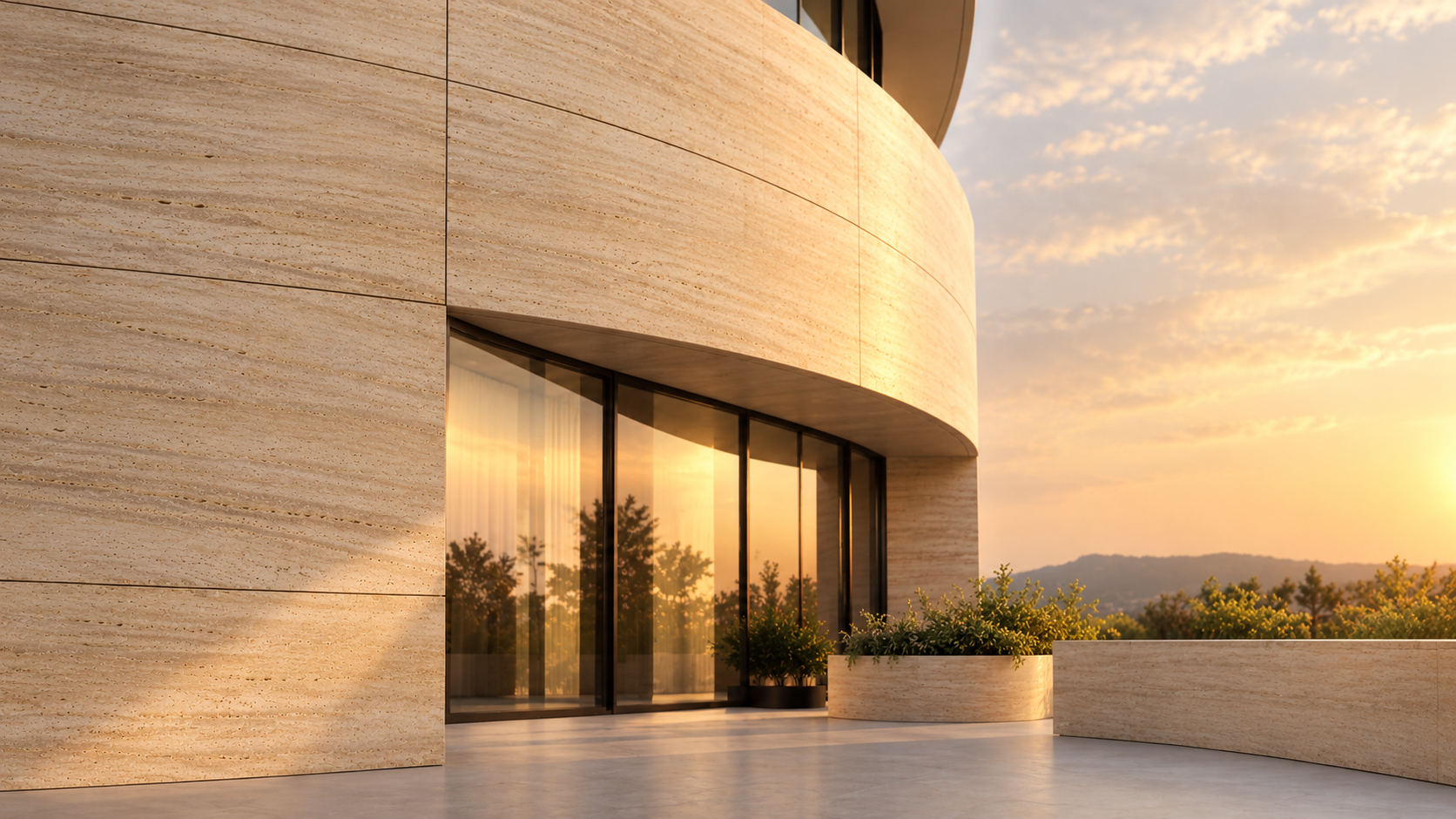
This type of cladding works well on both flat and curved areas. It is good for getting an attractive finish on things like feature walls, entryways, parapets and even inside walls. There are many projects where you see the visual result is much better. That is because you can now use this material in places too hard for heavy finishes.
The appearance of buildings gets better when you use texture, size, and depth in the right way. Thin cladding helps with this, especially if you want a modern facade with neat joints and less bulk.
In-Depth Look at Flexible Cladding Solutions
Flexible cladding shows best how a lightweight facade cladding can give more design options. Rigid finishes do not bend, but this one can. It fits easily on curved surfaces, arches, and columns. At the same time, it still gives that deep look you get from clay or stone.
This makes flexible cladding a good choice for high-rises, curtain walls, and retrofits. It also works well for internal cladding solutions, especially where the surface shape is not simple. To understand what makes it different, it helps to look at how it works, where it does best, and what care it needs.
How Flexible Cladding Works and Where It Excels
Flexible cladding comes in a thin style, so it can bend to fit shaped surfaces. This is what sets it apart from rigid tiles or thicker masonry finishes. You do not have to change the wall to match the material. The material will fit to the wall instead.
This helps to make easy installation possible on curves, arches and rounded parts. You can use it in places where composite cladding or other hard systems may not keep a clean look. The result is a much smoother wrap around tricky shapes.
This type of flexible cladding is also known for high durability, as long as it is made for outside use. If the material can stand up to UV, weather, and knocks, it will work as both decoration and protection on facades and in some inside spaces.
Benefits of Flexible Cladding on Curved Surfaces, Columns, and High-Rises
Curved architecture can be hard to work with in real life. Normal stiff finishes often need lots of cutting, lots of extra joints, and tricky work when you want to make them fit. Flexible cladding helps you avoid most of that. It can wrap more smoothly around things like curved walls and shapes that go straight up or down.
This ease of use is good for places like columns, arches, or on tall buildings. In these spots, it is harder to get things lined up and people do not have much space to work. It is also a good fit for curtain walls, or for doing up old facades again. Using lighter material is a big help for carrying, for setup, and for keeping the whole look just right.
- Wraps more naturally around curved surfaces and columns.
- Supports lighter facade treatment on high-rises.
- Helps maintain a continuous finish across arches.
- Works well where retrofit conditions limit heavy materials.
For outside walls, this makes it much easier to try new, modern ideas for cladding. Jobs that would be hard before are now much more doable and the results look cleaner.
Care, Maintenance, and Installation Guidance for Flexible Cladding
Flexible cladding is picked because it gives low maintenance. But no facade material is ever fully free from needing care. Before you start work, always look at the base it will go on, how it will be fixed, and where it will be placed. Doing this helps keep how it looks and lasts for a long time.
Maintenance requirements can be lower if the surface keeps out water, sun, and hits. Regular maintenance could just mean cleaning now and then. You may also need to check the joins or sides. This is even more important for tall buildings where you cannot get to all places easily.
- Check that the base surface is strong and flat.
- Use the recommended way to install the product.
- Clean the top surface whenever you need to so it stays clear.
- Over time, look at areas that get bad weather.
Minimal maintenance is a big reason why many people want thin and flexible systems now.
Spotlight on Flexura by Articlad: Features and Application Areas
Flexura is Articlad’s flexible cladding choice and it is the lightest one in the range. It is made with unfired natural clay and is only a few millimetres thick. With a thickness of 4 mm, it weighs about 5.2 kg for each square metre. Articlad is the only company in India making this with this special technology, so it is a true Made in India choice when you need light cladding.
The performance of this product is good for homes and also for commercial projects. Flexura is able to bend and go around arches and curved walls. You can use it for high up walls as well. It brings water absorption of less than 1%, can resist frost up to 200 cycles, and gives weather resistance, UV protection and it does not break easily if hit.
For design, Flexura gives an attractive finish and comes in looks like Wirecut, Archaic Brick, Slate, Travertine, Corten Steel, Rope Knit and Wood. That makes this a strong pick if you want thin cladding that looks good in many ways and gives high durability.
Brick Cladding and Concrete Stone Cladding Overview
Many projects still want the look of brick cladding or the stone cladding feel, even with all the flexible systems out there. These are found in a wide range of materials used for architectural cladding. They can fit well in both homes and workplaces.
Articlad also gives you cultured stone cladding and 3D concrete cladding as part of its concrete cladding options. You get more depth, a surface that looks made by hand, and stronger patterns than what you see on flat facades.
Architectural Advantages and Uses of Brick Cladding
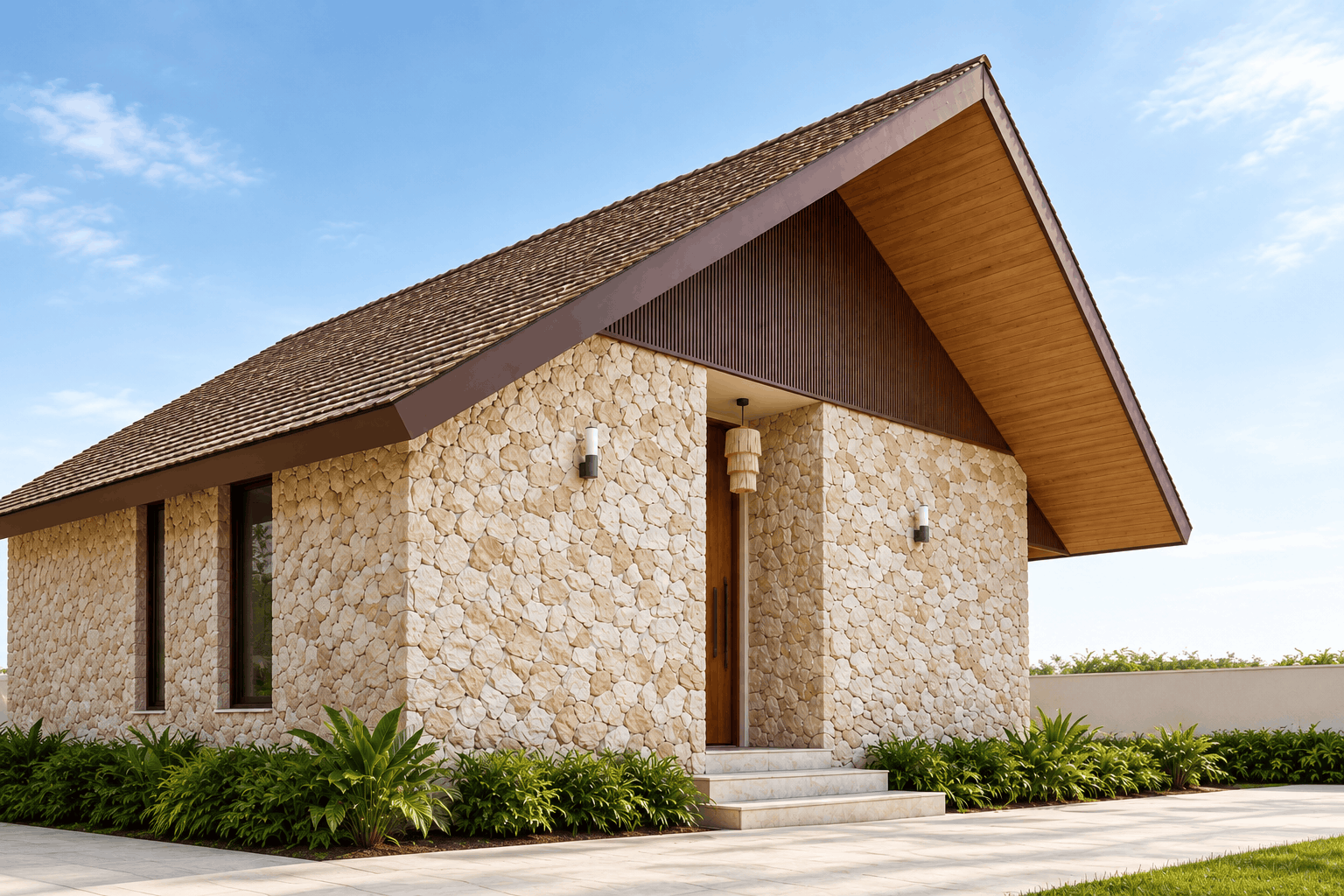
Brick cladding gives you the nice and warm feel of brick, but without the heavy weight of using full bricks. This outer layer can go on top of walls you already have. It works well for both new places and when you want to fix up old buildings. That is good if you like the look of real bricks but want it in a thin way.
The main benefit of this option is the look and feel you get. You can see and touch the recognisable brick texture. Brick cladding works well in homes, shops, hotels, and building fronts. It finds a good balance between a classic look and a modern way to build. Plus, this outer layer gives weather resistance and high durability if you use it outside.
Articlad’s Brick Cladding is about 12 to 14 mm thick. You can pick from groups like Base Bricks, German Bricks, Worn Out, Rustic, Wirecut, Old Bricks and Travertine. They come in both single and mixed colours.
Design Choices with Cultured Stone and 3D Concrete Cladding
Stone-inspired facade design aims to give depth and shadow to a building. Using cultured stone and 3D concrete cladding helps to get this look with less weight than full stone. You can use them for feature walls, entry areas, along landscape edges, and inside where texture is important.
Articlad’s Cultured Stone Cladding is made using cement and iron oxide colours. The designs offer different looks. They have Field Stone, European Castle Stone, River Basalt Stone, Desert Limestone, Rock Stone, Grand Sienna, River Rock, Ledge Stone, Premium Ledgestone, Artemis Visage Stone and Chess Mosaic. This stone cladding works well for people who want an attractive finish with style.
Articlad gives more choices under its Concrete Cladding line. These include Kratos Beton, Translucent Concrete and Canvas Concrete. With these choices, you can try more ideas to get a sculpted look or create a new, attractive finish for your space.
Selecting the Right Lightweight Cladding
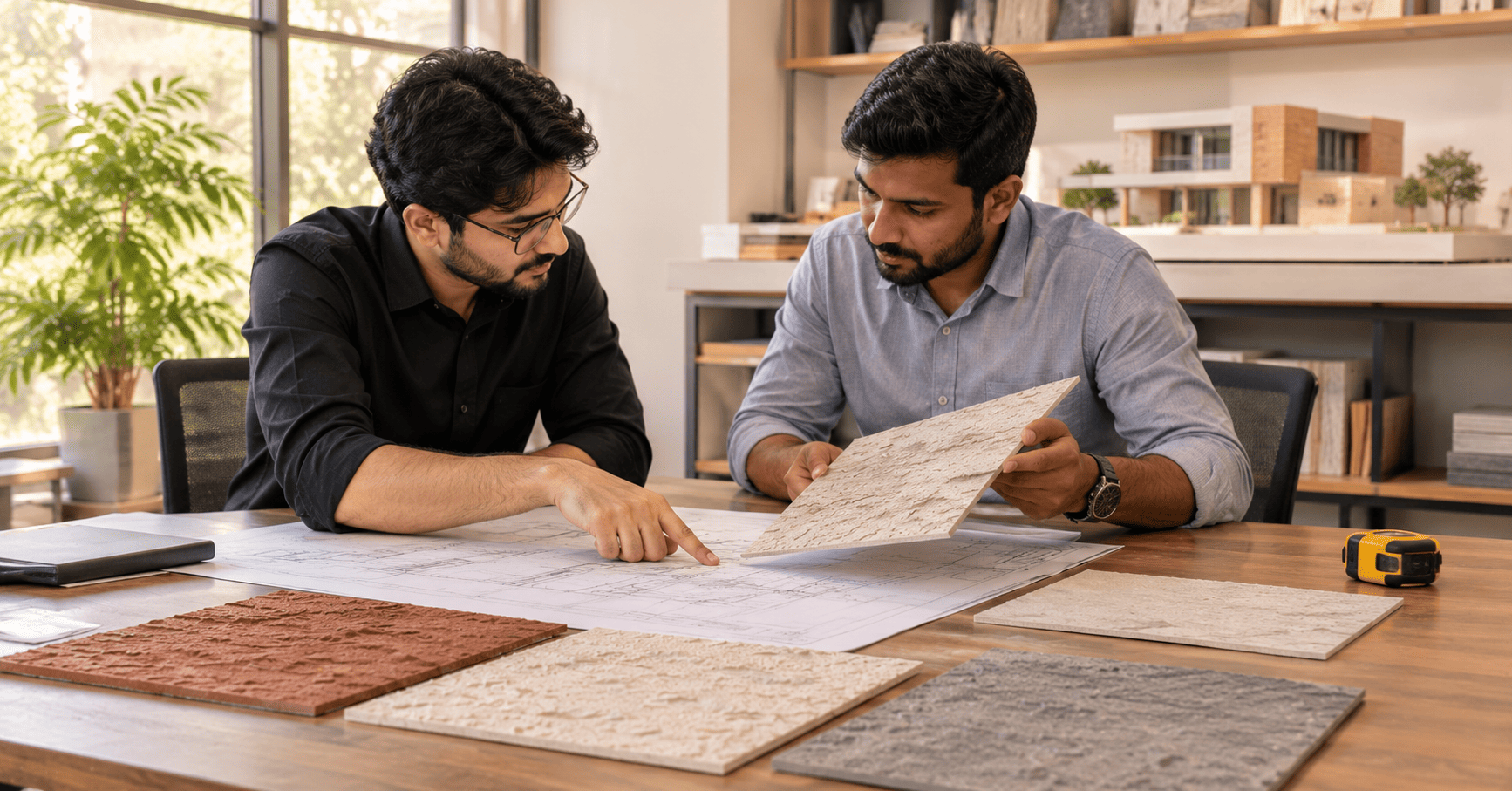
Choosing lightweight cladding should begin with what the project needs, not just how it looks. You have to check the wall and see its shape and condition. Think about how the sun, rain, or wind will hit it. It is important to know how the material will last over time. A smart choice finds the right balance between how the cladding works, what the weather does, and how good it looks.
Certification is important too. People now worry more about fire, so we have to see how facade materials act in real life. Always check if the cladding is right for your project, if you can put it on how you need, and if it fits how you want to use the building.
Checklist: Surface Shape, Structural Load, Climate and Certification
A simple checklist can help you avoid expensive errors. First, look at the wall itself. After that, check it for exposure and compliance. If you are trying to choose between lightweight wall cladding systems, pick the one that matches your design and fits the site needs.
The shape of the surface is more important than many people think. Flat walls can handle many types of materials. But curved walls, arches, and columns often need options that can be made to fit different shapes. You should also look at the weight the wall can hold, how it will be fixed, and how old the wall is.
- Check the shape of the surface and look for any curved spots.
- Look at how much weight the wall can take and check the condition under the surface.
- Make sure the material works with the local weather and climate.
- Check if it has the right certification and how it reacts to fire.
- Make sure the finish matches your project requirements and how the facade will be used.
Balancing Functionality, Maintenance, and Visual Appeal
Good cladding selection is not easy. You need to find the right balance. Sometimes a striking facade is not always best. If maintenance requirements are high or it is hard to install, it may not be what you want. Think about what you need every day and what finish you want.
Functionality comes first for parts that get a lot of weather. You want weather resistance, durability, and a material that works well with the wall. These matter more than just following trends. After that, think about how it looks, the colour, texture and how it will change as time goes by.
- Go for low maintenance finishes where it is hard to get access for cleaning or repairs.
- Pick flexible cladding if the shape is complex.
- Select brick or stone-look textures to give the material more character.
- Make sure the attractive finish goes well with the rest of the building.
If you think about all these things together, the facade will be better for you and easier to keep up.
About Articlad: Indian Innovation in Cladding Manufacturing
Articlad is a part of Elevate Building Solutions Pvt Ltd and is based in Mumbai. The company makes and sells wall cladding solutions for Indian weather. They help architects, designers, people who build homes or offices, and anyone looking for strong and useful choices for wall cladding in houses and commercial spaces.
The company has many products. You will find Flexible Cladding, Brick Cladding, Cultured Stone Cladding and Concrete Cladding here. This choice helps make their work fit well with the needs of cities in India. People want new design options, lighter wall cladding systems and good surface quality for their projects.
Articlad’s Commitment to Quality and Urban Indian Projects
Articlad has a strong place in the market because it makes products and helps with how they are used, not just by selling them. This is very important for urban Indian projects. In these places, things like climate, crowded areas, and the land size often mean you need to choose materials with care. A local maker can handle these needs better.
You can see Articlad’s focus on quality in its wide range of choices for different designs. There is flexible cladding that you can use on curved walls and tall buildings. The brick cladding and stone cladding are good if you want a classic or rough look for a building’s front. All these choices give people more options, so they can pick what works best for each job.
Articlad’s products can be used for both homes and workspaces. It depends on what material you pick and how you use it. Some of their products also give you a 25-year warranty. This makes people feel safe picking them for places that must last for a long time.
Range of Products and Expertise in Facade Solutions
The Articlad portfolio brings a number of choices for facade cladding to the table. You will find Flexura, brick cladding, stone cladding that looks like the real thing, and several other concrete cladding options. For people who need to pick what goes on a building, this means they can choose from many looks but stay within the world of cladding.
In plain terms, it means you have a single source for curved walls, straight facades, special interiors, and exterior cladding with texture. This helps a lot with commercial projects and buildings that mix different uses, where the look of the facade can change from one elevation, entry or curtain wall to another.
In this mix you will also find names like Kratos Beton, Translucent Concrete, and Canvas Concrete. These products together show that there is a focus on getting good facade solutions that mix the character of the material, lighter building work, plus many ways design can go.
Conclusion
To sum up, lightweight cladding brings a big change to building design. It gives you better looks and useful features at the same time. Because it is lighter, it is easy to put up, and it can also make a building stronger and more friendly for the environment. When you get to know the different kinds of lightweight cladding materials-like flexible cladding, brick cladding, or stone cladding-you can pick what fits your style and helps the planet. As building work moves forward, choosing these new options can help you get good, lasting, and eye-catching results. If you want to see how our flexible cladding materials can improve your next job, you can contact us for advice.
Frequently Asked Questions
How does lightweight cladding improve building durability?
Lightweight cladding can help improve the strength of a building by blocking the weather and taking stress off the building structure. If used in the right way, it can give good weather resistance and can also help support fire resistance. It helps the building’s front keep a high durability finish for a long time.
Is lightweight cladding suitable for Indian climatic conditions?
Yes, as long as the material works well with the local climate and what you need it for. If the place is warm, wet, or open, pick something that gives good weather resistance. It should also last a long time and need minimal maintenance. Picking lightweight cladding that is right is a key part of good building design, not just how it looks on the outside.
What makes flexible cladding distinct from other options?
Flexible cladding is different because it can bend around curves, arches, and columns. Rigid materials cannot do that. It makes easy installation possible for many shapes while keeping the good appearance of buildings. There is a wide range of materials, so you can find the one you need. Flexible cladding is also great when low weight and high durability are important.