A Lightweight & Sustainable Façade Solution for Modern Buildings
Modern buildings are no longer judged only by appearance — material choice now directly affects sustainability, structural efficiency, and long-term performance. Today, architects are actively searching for lightweight and sustainable façade materials that reduce environmental impact without compromising design.
One material gaining renewed attention is unfired clay cladding, now engineered into advanced façade systems like Articlad’s patented Flexura.
Quick Facts (Why Façade Materials Matter)
- Nearly 40% of construction emissions come from building materials.
- Heavy façades increase structural concrete and steel consumption.
- Conventional cladding often requires energy-intensive manufacturing.
- Lightweight systems can significantly reduce façade dead load.
What Are Conventional Façade Materials?
Most exterior cladding systems rely on high-energy industrial processes:
Aluminium Composite Panels (ACP)
- Energy-heavy aluminium production
- Higher embodied carbon footprint
Fired Ceramic & Terracotta Panels
- Kiln firing above 900–1000°C
- High fuel consumption during manufacturing
Natural Stone Cladding
- Resource-intensive quarrying and transport
- Adds significant structural weight
In high-rise buildings, increased façade weight directly impacts overall material usage and environmental performance.
What Is Unfired Clay Cladding?
Unfired clay cladding is a façade material manufactured without high-temperature kiln firing. By eliminating this process, embodied energy and carbon emissions are significantly reduced while maintaining natural material advantages.
Key Benefits
- Lower manufacturing energy
- Reduced environmental footprint
- Naturally breathable wall behaviour
- Supports passive cooling strategies
- Suitable for modern exterior façades
Flexura by Articlad — Patented Flexible Clay Cladding
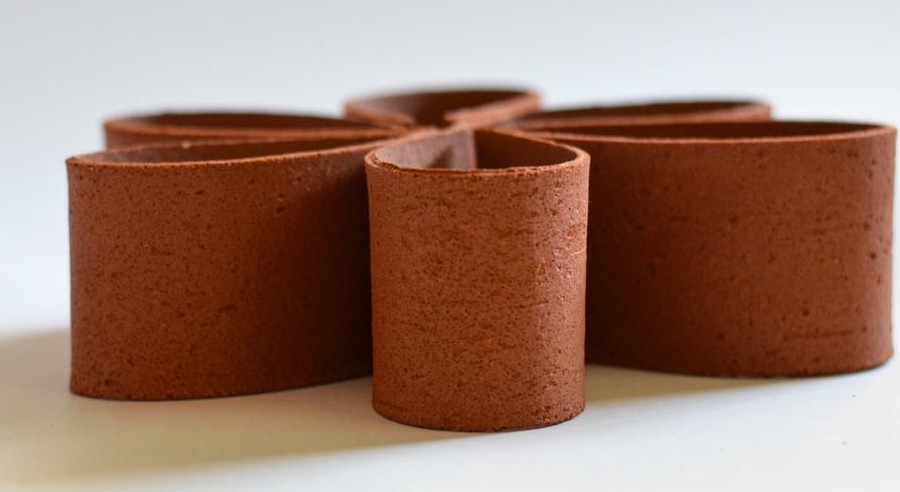
Flexura is a patented flexible clay cladding system developed by Articlad for contemporary buildings and high-rise elevations.
Unlike rigid façade panels, Flexura adapts to architectural forms while maintaining sustainability performance.
Key Features
✔ Lightweight façade system (~5.5 kg per sqm)
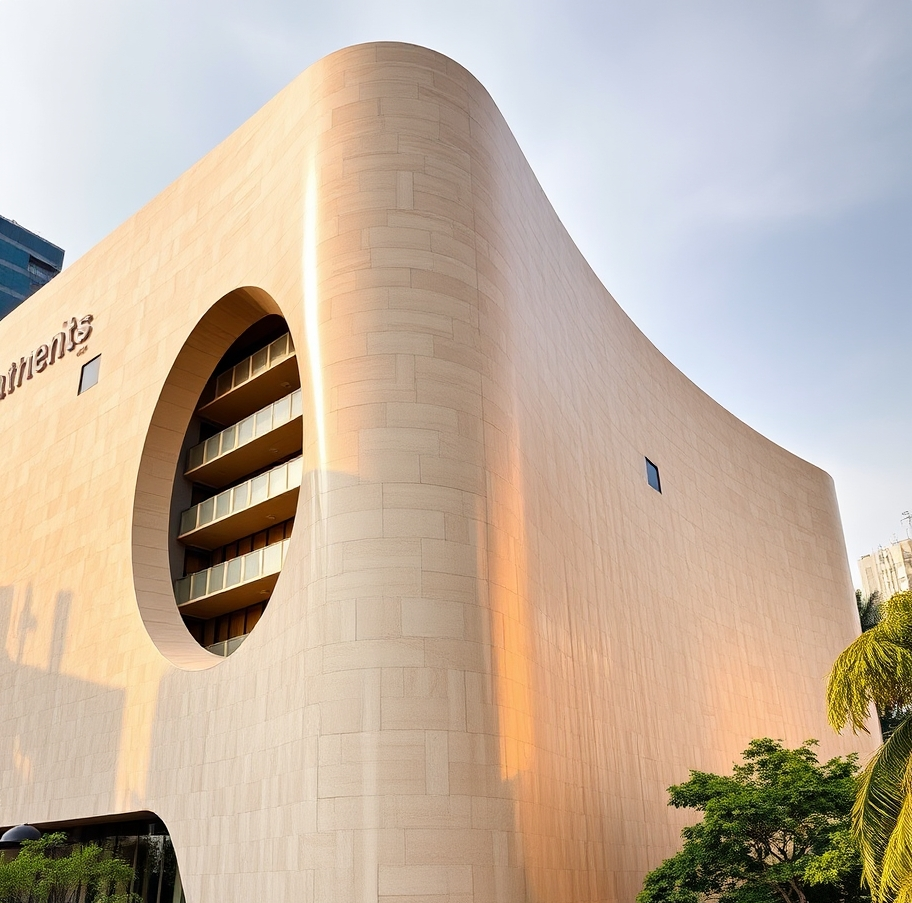
✔ Flexible and bendable for curved surfaces
✔ Weather-resistant exterior application
✔ Micro-porous breathable structure
✔ Multiple architectural finishes and textures
Its reduced weight helps minimise façade dead load, supporting efficient structural design and faster installation.
Environmental Comparison
| Parameter | Conventional Cladding | Flexura (Unfired Clay) |
|---|---|---|
| Manufacturing Energy | High | Low |
| Embodied Carbon | Higher | Reduced |
| Structural Load | Heavy | Lightweight |
| Flexibility | Rigid Panels | Flexible System |
| Sustainability | Limited | High |
Why Lightweight Façades Are the Future
As cities grow vertically, façade systems must balance performance with environmental responsibility. Materials that reduce structural load while improving sustainability are becoming essential in modern architecture.
Patented innovations such as Flexura demonstrate how unfired clay can evolve into a next-generation façade solution — combining traditional material intelligence with modern engineering.
Conclusion
Choosing the right façade material is no longer only a design decision; it is an environmental and structural one. Unfired clay cladding offers a practical path toward lighter, more sustainable buildings.
Flexura by Articlad represents this shift — a patented flexible clay cladding designed for lightweight, sustainable, and performance-driven façades.