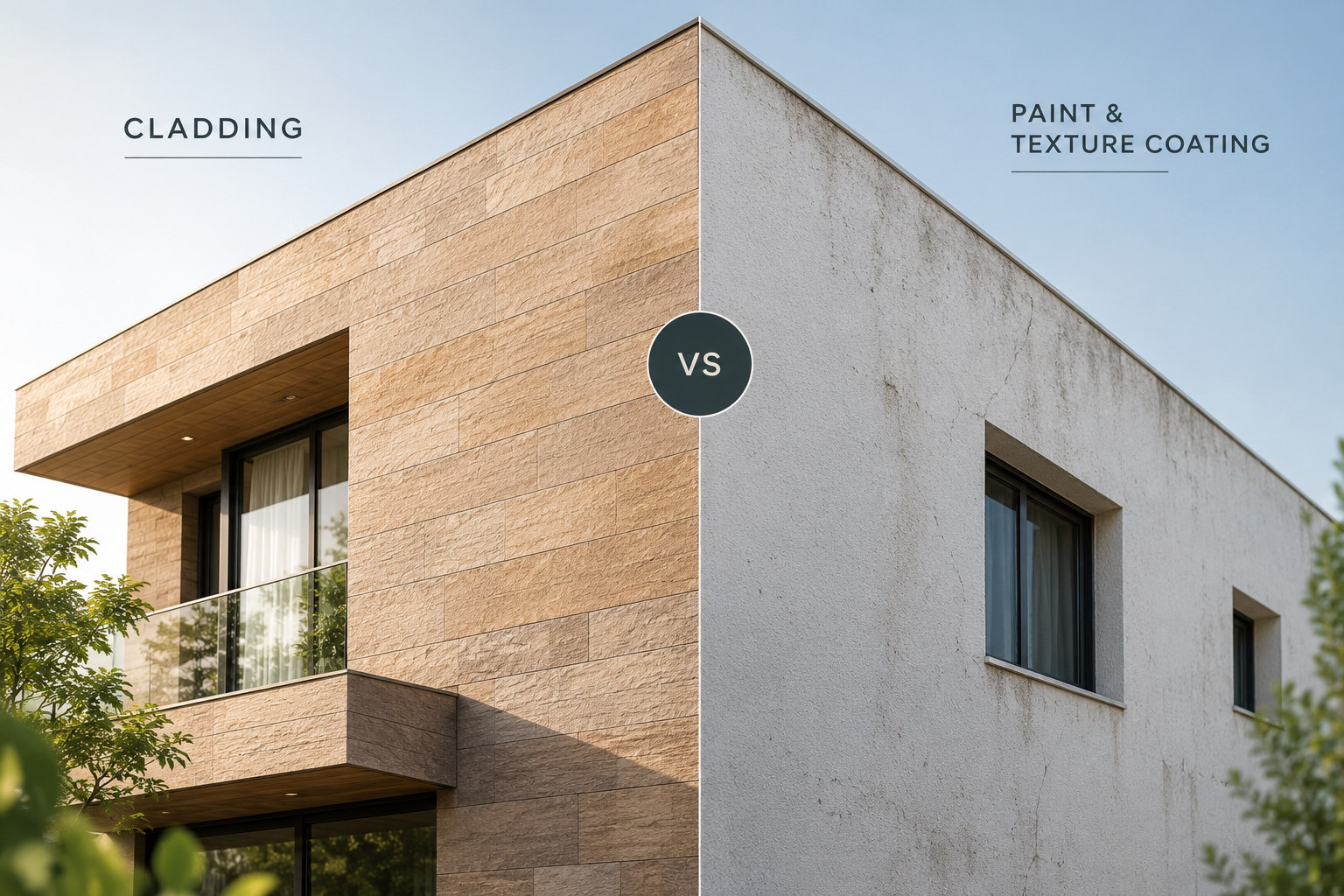
When you compare concrete cladding vs paint vs texture coating, the biggest question is simple: which one lasts longer on exterior walls? The answer matters because your finish affects protection, upkeep, and aesthetic appeal. Exterior wall cladding does more than change how a home looks. It acts as an outer shield against rain, sunlight, and temperature shifts. If you want a finish that looks good and performs well over time, cladding stands out as a practical choice.
Understanding Exterior Wall Finishes in India
Exterior walls in India face sun, rain, dust, and changing temperatures for much of the year. That is why your finish cannot be chosen only for looks. It also needs to protect the wall and support energy efficiency indoors.
In this comparison, exterior wall cladding, paint, and texture coating serve very different roles. Paint and texture coating mainly change the surface appearance, while cladding adds a stronger outer layer. To see why that matters, let’s break down how each option works.
Overview of Cladding, Paint, and Texture Coating
Start with the basics. Exterior wall cladding is an added outer layer fixed over a wall to protect it from water, wind, UV exposure, and temperature changes. It is used across residential buildings and commercial buildings because it combines function with style.
By contrast, paint is a surface finish. It can refresh a wall quickly and improve color, but it does not create the same protective barrier. Texture coating adds a more patterned surface than paint, giving visual interest, yet it still remains a coating rather than a separate shield.
So, what are the main benefits of using concrete cladding for exterior walls? It offers durability, fire safety, weather resistance, and a strong visual finish. It also helps extend wall life, supports better thermal performance, and reduces frequent upkeep when compared with paint or texture coating.
Differences in Material Composition and Performance
The difference starts with what each finish is made of. Paint and texture coating sit on the wall surface. Cladding uses separate materials such as natural materials, cement-based boards, metal panels, WPC, or concrete-based systems. That extra layer changes performance in a big way.
Concrete cladding and GFRC are known for strength, structural integrity, fire safety, and weather resistance. Other materials like stone, brick, timber, PVC, and WPC each bring different benefits. In cost terms, concrete cladding is usually a more serious upfront investment than paint, but it can compare well with premium cladding options because it lasts longer and needs less repeat work.
| Finish Type | Material Nature | Performance Notes |
|---|---|---|
| Paint | Surface coating | Lower protection, mainly visual change |
| Texture coating | Decorative coating | Adds texture, limited barrier function |
| Concrete/GFRC cladding | Cement-based panel system | Strong weather resistance, thermal insulation support, long life |
| Stone cladding | Natural materials | Very high durability, premium appearance |
Types of Wall Cladding for Modern Indian Homes
Modern Indian homes now use cladding not just for front elevation, but also for side walls, entry areas, and outdoor zones. That shift has opened up a wide range of options for homeowners who want both protection and style.
You can choose from stone cladding, concrete-based panels, timber-look systems, metal sheets, and composites. Natural stone cladding remains popular for its rich finish, while newer systems bring easier upkeep. Before comparing lifespan, it helps to know the main categories available today.
Concrete Cladding Options
Concrete cladding for homes usually appears in the form of precast concrete or GFRC panels. These are made off-site and then installed on the wall surface, giving a controlled finish and consistent quality. They are widely used in modern facades because they look clean and perform well.
What types of concrete cladding are available for modern homes? Based on the compiled information, the main options include precast concrete walls and GFRC-style exterior panels for contemporary facades. They are chosen for strength, thermal mass, and fire safety, while still allowing a wide range of exterior expressions.
- Precast concrete panels offer a uniform look and reliable site installation.
- GFRC cladding provides strength with design versatility for urban homes.
- Some systems support sustainable building goals by lasting longer and reducing replacement frequency.
Other Common Materials for Facade Cladding
Beyond concrete, homeowners often look at natural stone, brick, metal, PVC, fiber cement, timber cladding, and WPC. Each creates a different architectural style and performs differently in outdoor use. Your choice depends on the look you want and how much upkeep you can manage.
Natural stone and exterior stone cladding are especially valued for their timeless appeal, strength, and premium finish. They work well on facades, boundary walls, and feature walls. Timber cladding gives warmth, but it usually needs more maintenance than more stable exterior systems.
- Natural stone suits facades, garden walls, and statement elevations.
- WPC offers low maintenance with consistent appearance.
- Concrete cladding can also inspire interior stone wall or interior walls design language, though it is most strongly positioned here for exterior wall use.
Proven Advantages of Cladding Over Paint and Texture Coating
Paint and texture coating can change the look of a wall fast, but they do not match the deeper protection of cladding. That is the key reason cladding often shows superior longevity on exterior surfaces.
Over the long run, durability affects more than repairs. It also shapes energy costs, cleaning needs, and how often you need to refinish the facade. If you want a better choice with minimal maintenance, the next two points explain why cladding keeps pulling ahead.
Superior Longevity for Exterior Walls
Cladding is built to stay between your wall and the weather. That alone gives it an advantage over finishes that sit only on the surface. When exterior walls face years of sun, moisture, and temperature swings, the stronger system tends to hold up better.
Concrete cladding is suitable for Indian climates and weather conditions because the compiled information describes concrete and GFRC cladding as strong, fire-resistant, and long-lasting. Cladding in general protects against rain, wind, sunlight, and temperature changes, helping walls stand the test of time with better durability.
There is also a value angle. A finish that lasts longer protects structural integrity and reduces repeated repair cycles. That can support property value, especially when compared with paint or texture coating that may need more frequent renewal to keep the exterior looking sound.
Better Protection Against Indian Weather Conditions
Indian exteriors often deal with intense sun, monsoon moisture, dust, and temperature shifts. A finish must do more than look good at handover. It needs real weather resistance over years of exposure. This is where cladding clearly beats paint and texture coating.
Because cladding forms a protective barrier, it performs better in harsh weather conditions. It can also improve thermal performance, which supports energy efficiency and can help stabilize indoor comfort. Concrete, stone, metal, WPC, and fiber cement all offer stronger protection than a simple coating layer.
- Cladding shields walls from rain, UV exposure, and wind.
- Better thermal performance can help reduce stress on indoor cooling.
- Concrete wall cladding usually needs only periodic cleaning and routine checks rather than frequent recoating.
Design Versatility of Wall Cladding
Performance matters, but you also want the house to look right. Cladding works well here because it offers strong design flexibility without giving up durability. That balance is hard to get from paint alone.
From smooth modern panels to rustic stone surfaces, the customization options are broad. You can create subtle depth or a bold front elevation while preserving aesthetic appeal. To help you picture the possibilities, let’s look at patterns, textures, and Indian home inspiration.
Facade Patterns, Colors, and Textures
One reason cladding wins in modern design is surface variety. You can choose clean lines, textured finishes, stone-inspired looks, or industrial concrete-style panels. That makes it easier to create a unique look without depending only on color.
What are some popular design ideas for exterior walls using concrete cladding? The compiled information points to contemporary facades, urban elevations, and refined panel layouts that create a striking first impression. Homeowners can pair concrete cladding with stone sections or use it to highlight entry volumes and feature planes.
- Use large-format concrete-style panels for a modern front facade.
- Combine stone cladding and concrete finishes for layered design features.
- Select the right shade and surface texture to suit both traditional and modern homes.
Popular Inspiration Ideas for Indian Homes
Indian homes often use cladding in focused areas rather than across every wall. That approach helps control cost while still improving the overall exterior. It also lets you add depth in places that matter most visually.
Natural stone cladding remains a favorite because of its timeless appeal. It works beautifully on accent walls, porch frames, gate surrounds, garden walls, and boundary walls. Concrete-style systems suit sharper, more modern facades and pair well with simple landscaping and clean lines in outdoor spaces.
- Highlight the main entrance with textured stone or concrete panels.
- Use cladding on boundary walls to extend the facade language outward.
- Add material contrast on garden walls or accent walls for more visual interest.
Maintenance Needs: Cladding vs Paint vs Texture Coating
Maintenance often decides whether a finish still feels worth it after a few years. A wall may look great on day one, but if upkeep becomes frequent, the initial savings can disappear quickly.
That is why cladding is often seen as the low maintenance option. Compared with paint and texture coating, it usually offers better durability with minimal maintenance. To judge the real value, you need to compare both day-to-day care and cost over time.
Cleaning and Upkeep Requirements
Painted and texture-coated walls usually need fresh finishing to recover their original look after weather exposure. Cladding, on the other hand, is designed to hold appearance and protection for longer. That makes upkeep simpler for busy homeowners.
The compiled information repeatedly describes cladding materials such as stone, metal, fiber cement, and WPC as low maintenance. Natural stone wall cladding, for example, generally needs simple cleaning and occasional sealing. Concrete-style cladding also benefits from straightforward cleaning rather than frequent repainting.
- Routine cleaning helps preserve visual appeal on exterior walls.
- Some materials may need occasional sealing, but not constant recoating.
- Better surface protection can support steadier indoor temperatures by reducing heat impact on wall layers.
Durability and Cost Over Time
A lower upfront price does not always mean lower ownership cost. Paint may seem cheaper at first, but repeated repainting adds up. Texture coating can last longer than standard paint in some cases, yet it still does not provide the same wall protection as a true cladding system.
How does the cost of concrete cladding compare to other cladding materials? Based on the compiled information, concrete or GFRC cladding sits closer to long-life premium systems than low-cost coatings. It may cost more initially than paint, PVC, or some basic finishes, but its durability and lower maintenance can make it the better choice over time, especially when energy costs and repairs are considered.
| Option | Upfront Spend | Durability | Maintenance Demand | Cost Over Time |
|---|---|---|---|---|
| Paint | Low | Lower | High due to repeat finishing | Can rise steadily |
| Texture coating | Low to medium | Medium | Moderate | Higher than expected over years |
| Concrete/GFRC cladding | Medium to high | High | Low | Strong long-term value |
| Natural stone cladding | High | Very high | Low | Premium but long lasting |
Conclusion
In conclusion, when considering the best exterior wall finishes for your home, cladding stands out as the superior choice compared to paint and texture coating. Its impressive longevity, exceptional protection against harsh weather conditions, and design versatility make it a wise investment for any homeowner. Additionally, with lower maintenance requirements, cladding offers both beauty and practicality, ensuring your home retains its appeal for years to come. If you’re ready to enhance your home’s exterior and explore the many options available in cladding, don’t hesitate to reach out for expert guidance!