Introduction
If you want a smarter way to finish walls, Flexura offers a practical answer. This flexible cladding by Articlad is made in india and designed for today’s elevation facade requirements. It combines visual appeal with easier handling, faster application, and better adaptability than many rigid wall finishes. From residential walls to commercial exteriors, Flexura gives you more freedom in design without the bulk of traditional masonry. That makes it a strong choice when you want performance, appearance, and installation convenience together.
Why Flexura Stands Out as India’s Innovative Flexible Cladding
Exterior and interior cladding often uses brick, wood, stone, metal composite material, ceramic, vinyl, concrete, and artificial stone cladding. These materials protect surfaces and improve appearance, but many are heavy, rigid, or slow to install. That is where flexible cladding creates a clear difference.
Flexura is a flexi solution made in india that brings design ease and practical performance together. Backed by Patent certification, it supports both exterior and interior use while helping beautify and protect walls. You get the benefits of cladding for both applications: better looks, surface protection, and wider design options with less installation difficulty. The next sections explain why Articlad’s innovation stands apart.
Largest Manufacture in India with Patent Certification
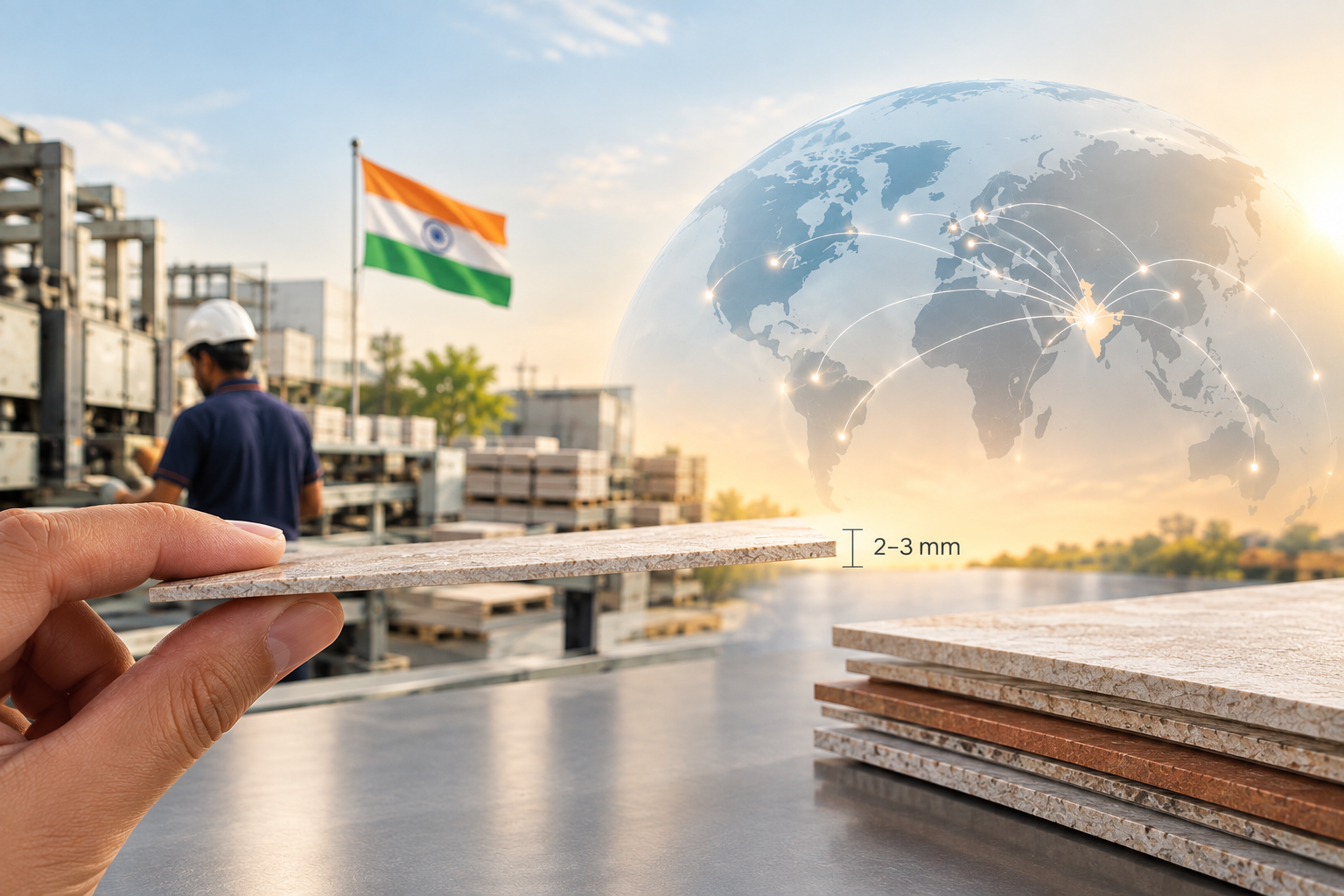
Articlad presents Flexura as a flexible cladding innovation developed and manufactured in India. For buyers who want a local source with product originality, that matters. A made in india solution can support project confidence, availability, and direct brand connection instead of depending on generic imported options.
What gives Flexura stronger identity is its patent certification. That shows the product is not just another copied wall finish. It reflects original development by the manufacturer and strengthens trust for architects, builders, and property owners looking for something distinct in the cladding market.
If you are wondering where to buy innovative flexible cladding panels manufactured in India, Articlad is the direct source behind Flexura. The brand positions itself as the sole patented manufacturer in India and one of the country’s largest wall cladding manufacturers. That gives you a clear place to start when you need manufacturer-backed product support.
Lightweight Product Advantages for Exterior and Interior Walls
Weight changes how easily a wall system moves from design to execution. Flexura is a light weight flexible cladding product, only 2-4 mm thin, with a listed weight of about 5.2 kg per sq.m at 4 mm thickness. For an elevation facade, that lighter profile can make handling and application simpler than traditional masonry.
This matters in both home/office projects and larger developments. Lightweight cladding products are especially useful for building elevations because they reduce the burden of heavy surface materials while still giving texture and finish options. In high-level applications, easier handling can also support faster site progress.
Key advantages include:
- Easier transportation and on-site handling
- Faster installation than traditional masonry
- Better suitability for high-rise elevation facade applications
- Simpler use across exterior and interior walls in a home/office setting
These practical gains help you save time while keeping more design freedom.
Versatility of Flexura: Applications and Design Possibilities
Design flexibility is one of the main reasons people choose Flexura. This flexible cladding, or flexi wall finish, can recreate different looks and textures while staying thin and bendable. That opens more options than rigid materials when you want distinctive surfaces.
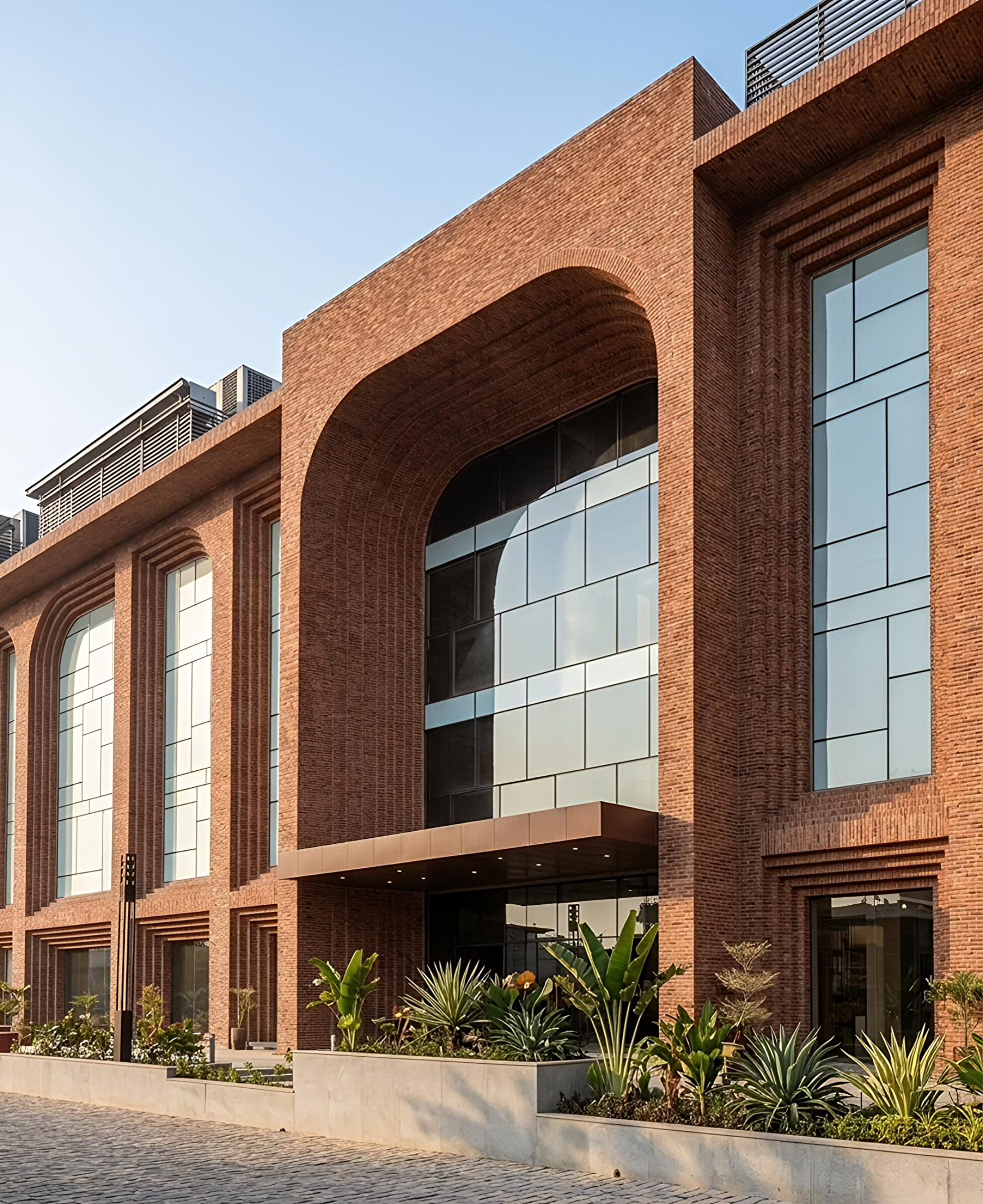
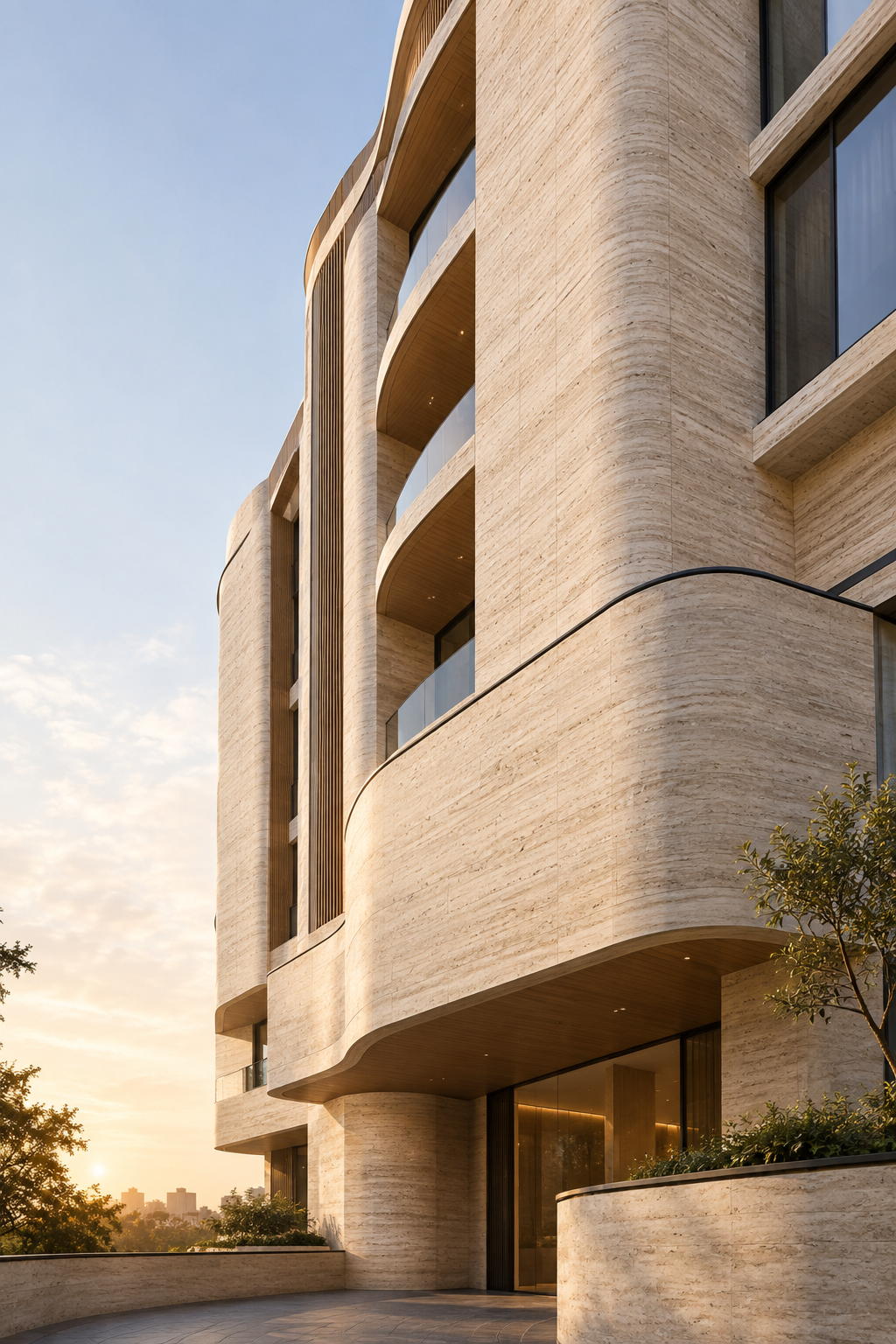
For an elevation facade on a high-rise building, innovative ideas often come from shape, texture, and material expression. Flexura supports that by working on arches, pillars, cylinders, and feature walls while offering styles like brick, slate, travertine, corten steel, rope knit, and wood looks. Next, let’s look at where this adaptability makes the biggest difference.
Easy to Cut and Install on Curved Pillars and Wall Arch Designs
Not every wall is flat, and that is often where standard materials become difficult. Flexura flexible cladding is designed for flexi use on curved surfaces, making it suitable for wall arches, round pillars, cylinders, and other irregular shapes. If you have been asking whether flexible cladding suits curved or uneven walls, the answer here is yes.
Because the material is thin and bendable, it can be cut and applied more easily than rigid masonry finishes. It is made to affix to arched surfaces while maintaining endurance and visual appeal. This gives architects and installers more freedom when working with custom forms.
Practical use cases include:
- Curved pillars in lobbies or entryways
- Wall arch designs in homes and offices
- Rounded facade details on exterior structures
That combination of easy shaping and simpler installation makes Flexura especially useful where design lines are not straight.
Comparing Flexible Cladding to Traditional Materials for Home and Office Use
When you compare flexible cladding with traditional materials, the biggest differences usually come down to weight, flexibility, and installation speed. Traditional materials like brick, stone, ceramic, wood, and precast concrete each offer strengths, but many are heavier, more rigid, or need more effort on site. That can affect both home/office timelines and design choices.
Flexura is aimed at projects that need easier handling and broader application possibilities. It is thin, bendable, and faster to install than traditional masonry. It also works on more varied substrates and complex surfaces, which can be harder for rigid finishes.
| Feature | Flexura flexible cladding | Traditional materials |
|---|---|---|
| Weight | Light weight | Often heavier |
| Shape adaptability | Works on curves and arches | Usually limited on irregular forms |
| Installation speed | Faster than traditional masonry | Often slower and labor intensive |
| Use in home/office | Suitable for both | Depends on product type |
| Design freedom | High | Often more restricted |
Maintenance and Durability of Flexura Flexible Cladding
A wall finish should not only look good on day one. Flexura flexible cladding is built with durability-focused features such as high impact resistance, weather resistance, UV resistance, frost resistance up to 200 cycles, and water absorption below 1%. These qualities matter for long-term elevation facade performance.
Maintenance questions are also important. Different cladding materials need different cleaning methods, but low-absorption and weather-resistant products generally simplify upkeep. Flexura’s moisture resistance and abrasion resistance support easier care over time. The next sections explain practical cleaning and installation points for exterior and interior use.
Cleaning Tips for Different Cladding Types
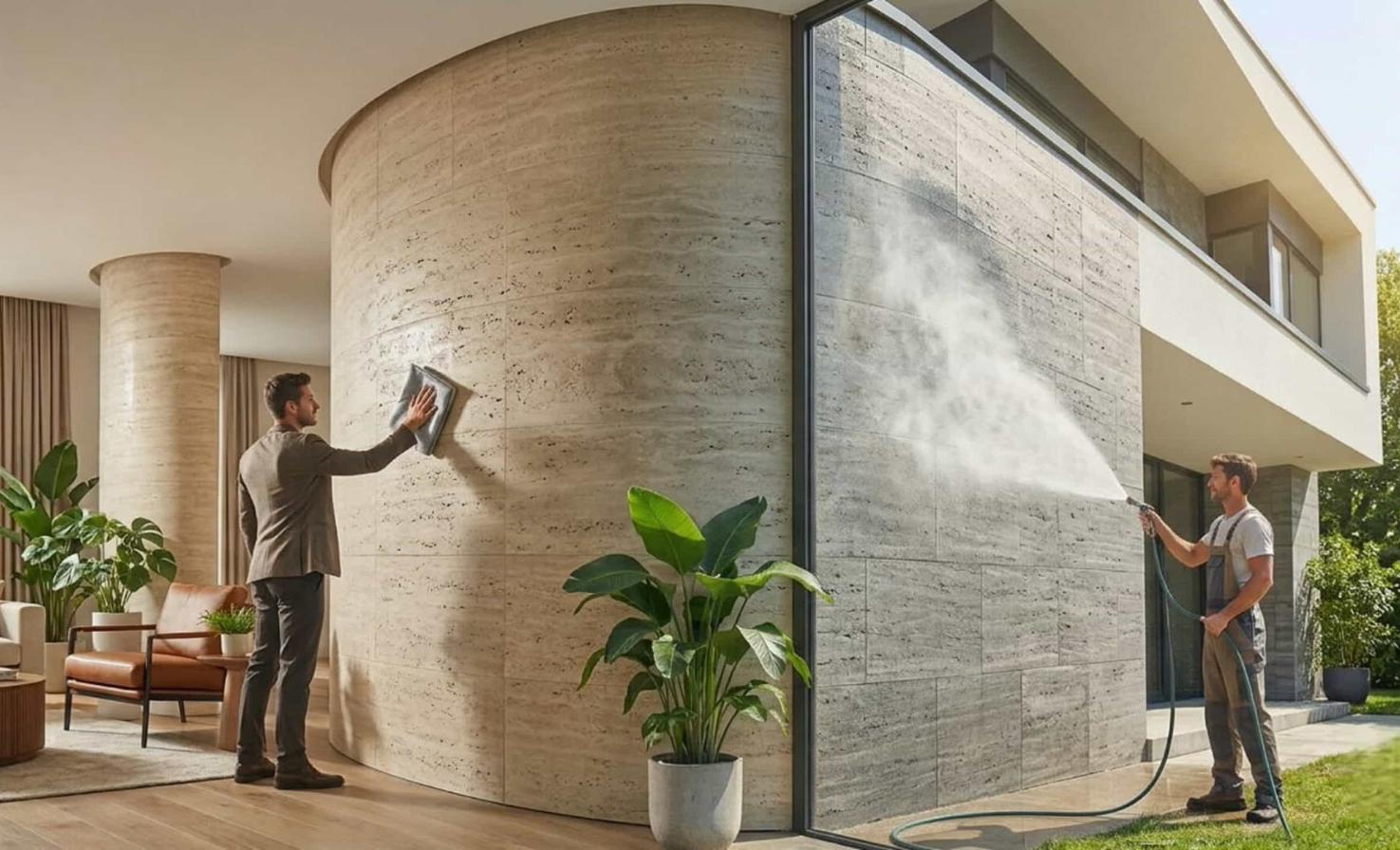
Cladding maintenance depends on the material. Brick may need yearly cleaning and mortar touch-ups. Precast concrete can be hosed down yearly if sealed. Ceramic often needs occasional washing, while wood generally needs more regular care because of moisture sensitivity. So, how do you maintain and clean different types of cladding materials? Start by matching the cleaning method to the material behavior.
For flexible cladding, low water absorption and good weather resistance can make upkeep more manageable. Flexura is listed with less than 1% water absorption, along with moisture, UV, and abrasion resistance. That supports routine maintenance without the demanding care some traditional surfaces require.
Useful cleaning habits include:
- Remove surface dust and dirt regularly with gentle washing
- Avoid harsh treatment that could affect the finish
- Check joints and edges during routine maintenance for lasting performance
Simple, regular cleaning helps preserve appearance and long-term wall condition.
Installation Differences Between Exterior and Interior Cladding
Exterior and interior cladding do not always install the same way because performance demands differ. Exterior surfaces face weather, moisture, frost, UV exposure, and temperature shifts. Interior walls usually focus more on appearance, finish continuity, and easier application over prepared substrates. That changes how you assess product suitability.
Flexible cladding helps bridge both needs because it is designed for exterior and interior use. Its thin, lightweight form allows application on almost any substrate, and its flexibility helps it sustain substrate movement without hollowness, breakage, or fall-off. That gives you a practical edge in varied project conditions.
Key installation differences include:
- Exterior installation must account for weather and moisture exposure
- Interior installation often prioritizes finish speed and design detailing
- Flexible cladding can simplify both through lighter handling and easier adaptation
That makes Flexura a useful option when one material is needed across multiple spaces.
Conclusion
In conclusion, Flexura is not just another cladding product; it represents a significant advancement in the world of architectural design and innovation. With its patent certification and position as India’s largest manufacturer, Flexura offers unparalleled versatility and lightweight advantages for both exterior and interior applications. Its easy installation on curved surfaces and unique aesthetic possibilities make it an ideal choice for any modern project. As you consider enhancing your spaces, think about how Flexura can transform your design vision into reality. For more information or to explore options tailored to your needs, feel free to reach out for a consultation!
Frequently Asked Questions
Is flexible cladding suitable for curved or irregular surfaces?
Yes. Flexura flexible cladding is designed for flexi use on curved surfaces such as arches, pillars, and rounded walls. Because it is thin and bendable, it suits irregular forms better than rigid masonry. This made in india solution works well when your elevation facade includes custom shapes.
Where can I buy innovative flexible cladding panels manufactured in India?
You can buy Flexura directly from Articlad, the manufacturer behind this flexible cladding system. It is a made in india, high quality product backed by patent certification. If you want manufacturer-supported solutions for an elevation facade project, Articlad is the direct source to contact.
What are the benefits of using lightweight cladding products for building elevations?
Lightweight cladding helps reduce handling difficulty, supports faster installation, and is especially useful on a high-rise building. For an elevation facade, that means easier application with less bulk than traditional masonry. Flexura flexible cladding, made in india, combines these practical benefits with bendability and design versatility