Introduction
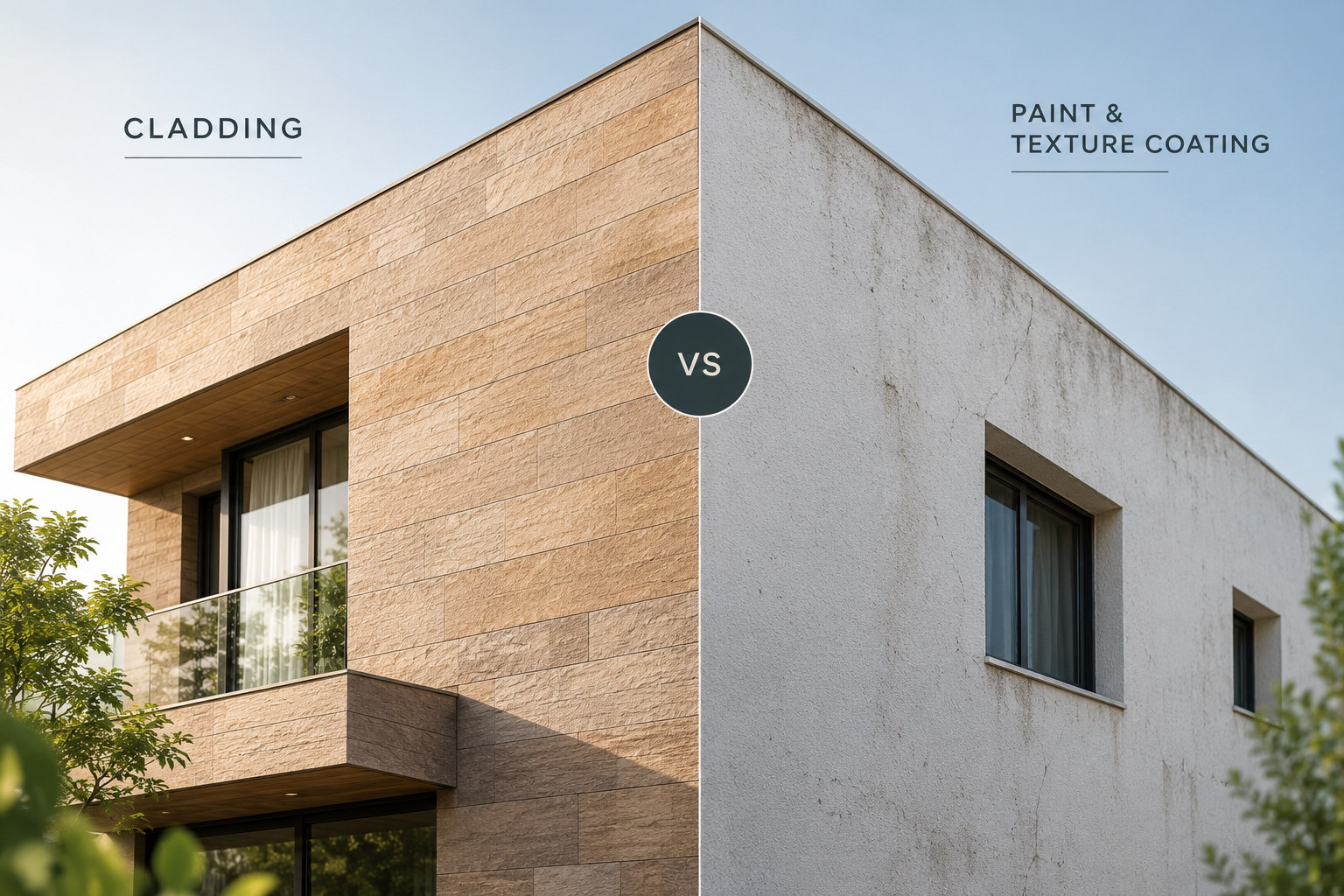
When you choose a wall finish for a new project, the way it looks on day one is only half the story. The other half is how it looks after five, ten years. Dust, rain marks, splashes, and everyday wear can make even a beautiful surface look tired if it is hard to maintain.
That is why more architects, builders, and homeowners are choosing flexible cladding. It gives you the look of natural finishes, such as brick, stone, or terracotta, in a thin, lightweight, flexible form. It is also easy to clean and low maintenance, whether it is on a tall exterior facade or a feature wall inside your home.
In this blog, we explain why flexible cladding is so easy to clean, how to clean it in exterior and interior spaces, and how to keep it looking fresh with very little effort.
What Is Flexible Cladding?
Flexible cladding is a thin, lightweight wall finishing material that can bend and follow the shape of a surface. Products such as Flexura are made from unfired natural clay. They stay thin and light but remain strong and protective.
Unlike heavy traditional masonry, flexible cladding can be applied to:
- Flat walls
- Curved walls
- Arched surfaces
- High-rise building facades
- Interior feature walls, columns, and accent areas
Because it is flexible, it gives designers freedom to create unique shapes without giving up durability or performance.
Why Flexible Cladding Is Easy to Clean
The biggest reasons flexible cladding stays clean with so little effort are its material properties and surface performance.
1. less than 1% Absorption
Low water absorption is one of the most important features of any easy-to-clean surface. When a material soaks up water, it also soaks up dirt, stains, and moisture. Flexura has water absorption of less than 1%, so dirt tends to sit on the surface instead of sinking in. That means:
- Less staining
- Less buildup
- Quicker, more effective cleaning with plain water
2. Resistance to Weather and UV
Exterior surfaces face sun, rain, heat, and frost every day. Flexible cladding is designed with UV protection, weather resistance, and frost resistance, so it holds up without constant treatment, coatings, or repainting. A surface that resists deterioration also stays smoother and cleaner for longer.
3. No Need for Harsh Chemicals
Most routine cleaning needs nothing more than a damp cloth, water, or a broom. You can skip the special treatments and heavy cleaners, which saves money and keeps your maintenance routine simple.
4. Strong Surface Protection
Flexible cladding works as both a visual finish and a protective layer. When it is installed correctly and bonds well to the substrate, it helps reduce cracking, surface deterioration, and early failure, all of which can trap dirt and make cleaning harder.
Cleaning Flexible Cladding on Exterior Facades
Exterior walls take the most abuse. Dust, pollution, rain splashes, and bird droppings are all part of life on a building’s outer surface. Here is how to keep a flexible cladding facade looking good with minimal effort.
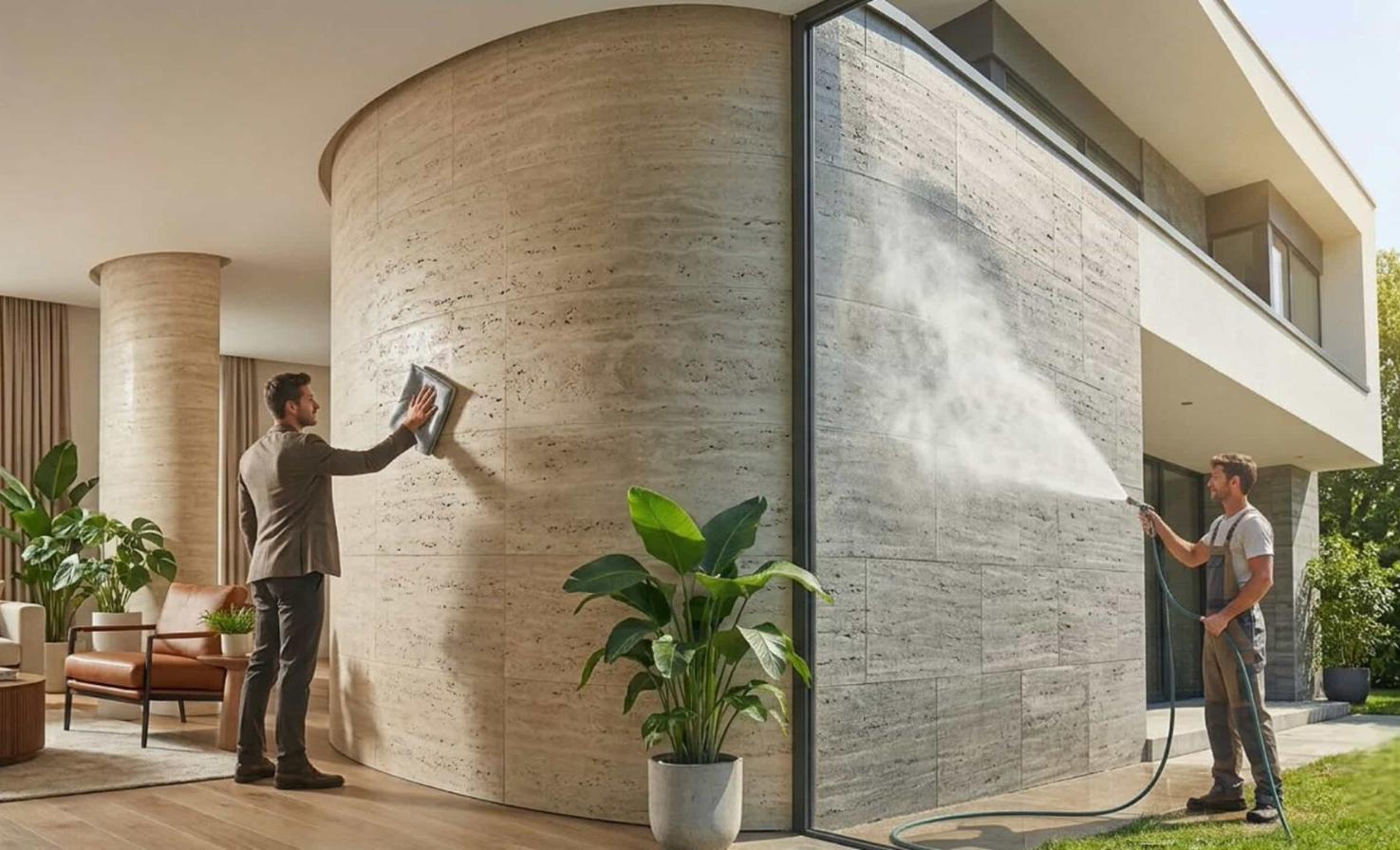
Step 1: Sweep or Brush Away Loose Dust
For dry exterior areas, start by sweeping with a soft broom to remove loose dust and debris. This stops dirt from turning into mud when water is applied.
Step 2: Rinse with Normal Water Pressure
Use normal water pressure to rinse the surface. Because the cladding has low water absorption, dirt sits on top and washes away easily. There is no need for aggressive scrubbing or high-pressure treatments.
Step 3: Spot Clean Marks with a Damp Cloth
For small marks, splashes, or stubborn spots within reach, wipe gently with a soft damp cloth and clean water. Rinse the cloth as needed so you don’t spread dirt around.
Step 4: Let It Air Dry
Allow the surface to dry naturally. No special coatings, sealers, or finishing treatments are needed afterwards.
Pro tip: Regular light cleaning works far better than waiting for heavy buildup. A quick rinse a few times a year is usually enough to keep an exterior facade looking presentable.
Why This Matters for High-Rise and Commercial Buildings
On tall buildings, maintenance can be expensive and difficult. A facade material that doesn’t need frequent special treatment can mean lower long-term maintenance costs, less downtime, and fewer access challenges. Flexible cladding’s resistance to UV, weather, and moisture makes it a practical choice for these projects.
Cleaning Flexible Cladding in Interior Projects
Flexible cladding isn’t only for the outside. Indoors, it works beautifully on feature walls, lobbies, restaurants, retail spaces, staircases, and columns. Interior cleaning is even simpler.
Routine Dusting
Interior surfaces collect fine dust over time. Wipe the surface with a dry or slightly damp soft cloth to keep it clean and fresh. Because the surface doesn’t hold onto dust the way rough or porous finishes can, it takes very little effort.
Removing Light Marks and Splashes
In kitchens, restaurants, entryways, or high-traffic areas, walls pick up splashes and fingerprints. Use a soft cloth with clean water, wipe gently, and let the surface air dry.
Cleaning in Humid Areas
Spaces with higher humidity need surfaces that don’t trap moisture. Low water absorption helps reduce the conditions that encourage dampness-related problems, and wiping down surfaces before buildup becomes stubborn keeps them looking neat.
Tips for Interior Cleaning
- Use soft cloths rather than abrasive pads
- Avoid heavy scrubbing, since gentle wiping is usually enough
- Clean small marks quickly before they set
- Keep a regular light-cleaning routine instead of waiting for heavy buildup
Quick Comparison: Exterior vs. Interior Cleaning
| Feature | Exterior Projects | Interior Projects |
|---|---|---|
| Main dirt type | Dust, rain marks, pollution | Dust, fingerprints, light splashes |
| Best cleaning tools | Broom, water, damp cloth | Soft dry or damp cloth |
| Cleaning frequency | Seasonal or as needed | Occasional wipe-downs |
| Special products needed | None required | None required |
| Effort level | Low | Very low |
Key Benefits of Easy-to-Clean Flexible Cladding
Choosing a cladding that is easy to clean brings benefits that go well beyond appearance.
1. Lower maintenance requirements: Less time, money, and effort spent on upkeep over the life of the building.
2. Better long-term appearance: Surfaces that resist staining and buildup look newer for longer.
3. Reduced water usage: When dirt lifts easily, you spend less time rinsing and repeating, which can mean lower water usage for cleaning.
4. Healthier spaces: Surfaces that shed moisture and dirt are less likely to hold grime, helping keep your living or working environment cleaner and more hygienic.
5. Durability and protection: High impact resistance, weather resistance, and UV protection mean the cladding keeps performing, so cleaning stays simple.
6. Design freedom: You don’t have to choose between a beautiful curved facade and an easy-to-maintain one. Flexible cladding delivers both.
Tips to Keep Flexible Cladding Clean for Years
Flexible cladding is very low maintenance, but no exterior surface is completely maintenance-free. A little regular care goes a long way.
- Start with proper installation. A clean, dry, suitable surface helps the cladding bond well. Poor preparation can lead to gaps or trapped dirt later.
- Clean regularly and lightly. Frequent gentle cleaning is easier than tackling heavy buildup.
- Use water first. In most cases, water and a soft cloth or broom are all you need.
- Avoid unnecessary chemicals. Overusing cleaners is rarely necessary and adds cost.
- Inspect occasionally. A quick visual check after heavy weather helps you spot any issues early.
Flexible Cladding vs. Traditional Finishes: Cleaning and Maintenance
Heavy traditional finishes often need more upkeep. Porous surfaces can absorb water and stains, and some require repeated coatings or treatments to stay protected.
Flexible cladding takes a different approach. Its low water absorption, weather resistance, and UV protection mean there is less to treat, less to repair, and less to clean. Combined with a thin, lightweight build that can be installed faster than traditional masonry on many surfaces, it offers a practical advantage from installation through long-term care.
Where Can You Use Flexible Cladding?
Because it is easy to clean and adaptable, flexible cladding suits a wide range of projects:
- Residential homes: exterior walls, entrances, boundary walls, and feature walls
- High-rise buildings: facades that need lightweight, durable finishes
- Commercial spaces: malls, offices, hotels, and restaurants
- Curved and arched structures: designs where rigid materials struggle
- Interior accent areas: lobbies, staircases, columns, and living room feature walls
Frequently Asked Questions
Is flexible cladding really easy to clean?
Yes. Its very low water absorption (less than 1% for Flexura) means dirt stays on the surface and can usually be removed with water, a damp cloth, or a broom.
Do I need special cleaning products for flexible cladding?
In most cases, no. Plain water and a soft cloth or broom are usually enough, so you can avoid harsh chemicals and expensive treatments.
Can flexible cladding be used both outdoors and indoors?
Yes. It is especially strong for exterior facades because it handles weather, UV, and moisture well, and it also works beautifully in interior projects such as feature walls and lobbies.
Is flexible cladding completely maintenance-free?
It is very low maintenance, and many people consider it close to zero maintenance for facade use. However, every exterior surface benefits from occasional light cleaning and inspection.
How often should I clean flexible cladding?
For exteriors, a light rinse or sweep a few times a year, or as needed, is usually enough. Interior surfaces typically need only occasional dusting or wiping.
Does flexible cladding work on curved walls?
Yes. Its flexibility lets it follow curved and arched surfaces while staying thin and lightweight, making it popular for complex designs and high-rise buildings.
Conclusion
Beautiful walls should not mean endless maintenance. Flexible cladding combines stunning design flexibility with real-world practicality: low water absorption, strong weather and UV resistance, durable surface protection, and cleaning that is as simple as a damp cloth, some water, or a broom.
Whether you are planning an exterior facade for a high-rise or a statement wall inside your home, flexible cladding helps you create spaces that look great and stay that way with minimal effort.
Ready to choose a facade or interior finish that is easy to clean and built to last? Contact us today for a free consultation and discover how flexible cladding can transform your next project.